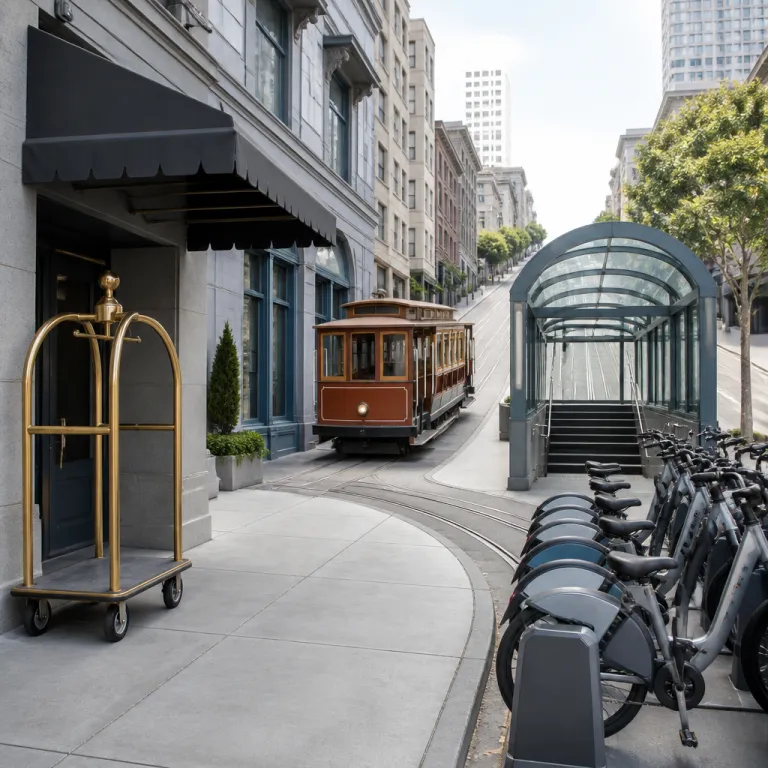
Why your hotel choice should follow the transit lines
Choosing a hotel in San Francisco is easier when you start with the transit map rather than glossy room photos. Any practical San Francisco public transportation guide for hotel guests begins with one principle: stay where the Muni and BART rapid transit systems intersect, because that is where your travel time and stress both shrink. Around Union Square, SoMa, and the Embarcadero, the city transportation network places you within a short walk of buses, Muni Metro, cable cars, and Bay Area Rapid Transit trains.
In this dense Bay Area core, people who rely on public transit can reach most major sights in under thirty minutes, which matters if you plan to return to your hotel between meetings, meals, or shows. The San Francisco Municipal Transportation Agency network of Muni buses and light rail lines runs north to Fisherman’s Wharf, west to Golden Gate Park, and south toward neighborhoods like the Mission and Glen Park, while BART connects the city to the East Bay and to San Francisco International Airport. When you compare hotels, look carefully at walking distance to a Muni stop, a BART station, and at least one cable car line, because that trio forms the best foundation for car free travel.
Guests who expect to attend events at Chase Center, Oracle Park, or the Moscone Center should prioritize hotels near the T Third Street Muni line or near Embarcadero Station on the regional rapid transit spine. For example, a Union Square hotel such as one on Powell Street is roughly a five to ten minute walk to Powell Street Station, while many SoMa properties near Second Street sit within a similar walk of Montgomery Street Station, keeping transfers short. Before you book, open a trip planner from the San Francisco Municipal Transportation Agency or BART, plug in your potential hotel address, and test how many transfers it takes to reach your must see places; note the date of the schedule you are viewing so you can confirm it again just before travel.
Understanding Muni: the backbone of city movement
Muni, operated by the San Francisco Municipal Transportation Agency, is the city transit system that most visitors will use daily. It combines buses, trolley buses, light rail, historic streetcars, and the iconic cable cars into one integrated service, which is why any serious San Francisco public transportation guide treats Muni as the starting point for planning. With roughly 700,000 daily riders in recent years, according to SFMTA ridership summaries published in 2023, this public network moves people through almost every San Francisco neighbourhood, from the bay waterfront to the hills above Twin Peaks.
For hotel guests, the key is to understand how Muni buses and Muni Metro trains share the same fare structure and accept the same Clipper card, so you can transfer between modes without thinking about separate tickets. As of early 2024, a typical adult Muni trip within the city costs about 2.50 dollars when paid with a Clipper card, and your fare usually remains valid for ninety minutes, allowing you to change buses or switch from a bus service to light rail without paying again; always verify the current price on the official SFMTA fare page before you ride. If your hotel is near Market Street, you will see Muni Metro lines running underground in the city centre and then surfacing as light rail in the outer districts, which makes them especially useful for reaching the ocean or Golden Gate Park.
Many visitors underestimate how steep San Francisco streets can be, so using Muni buses to climb hills saves both time and energy. When you evaluate hotels in areas like Nob Hill, Russian Hill, or Pacific Heights, check whether a frequent bus line stops nearby, because that determines whether you will actually enjoy the views or resent the daily climb. For late night returns to your room, confirm that your preferred routes offer evening service, and use official trip planner tools to see the last departure times from dining or nightlife districts back toward your chosen area transit corridor; concierges in larger hotels can often suggest specific routes regulars use after theatre performances.
BART, Caltrain and regional links from your hotel door
Bay Area Rapid Transit, known simply as BART, is the regional rapid transit system that links San Francisco with the East Bay, the airport, and parts of the peninsula. While Muni focuses on local city transportation, BART trains run on dedicated tracks and cover longer distances quickly, which is essential if your hotel stay includes meetings in Oakland, Berkeley, or trips toward the East Bay suburbs. From downtown San Francisco stations such as Embarcadero, Montgomery, Powell, and Civic Center, you can reach San Francisco International Airport in under forty minutes without touching a steering wheel, according to typical travel times listed on BART schedules updated in 2024.
Many visitors also combine BART with Caltrain, the commuter rail line that runs south toward San José, especially when business or sports events take them beyond the city limits. The informal phrase “BART Caltrain connection” usually refers to transferring at Millbrae Station, where the two transit systems meet and where a single Clipper card works across both services, simplifying payment for people who are new to the Bay Area. If you expect to travel frequently between San Francisco and San José, consider a hotel near Powell or Montgomery stations, because those locations minimise transfer times between your room, BART platforms, and the Caltrain corridor; Caltrain timetables dated 2024 show frequent service during commute periods.
Regional planning also matters for leisure travellers who want to explore wine country, tech campuses, or waterfront towns without renting a car or paying for drive park fees. You can use BART to reach the East Bay, then connect to buses or ferries, while still relying on the same Clipper card that you used on Muni buses and cable cars earlier in the day. A well located hotel near a major BART hub effectively extends your reach across the entire area transit network, turning a short city break into a broader Bay Area experience; just remember to check the date on any online trip planner results so you know they match your travel month.
Paying smart: Clipper card, passes and mobile tools
For most hotel guests, the Clipper card is the single most important tool in any San Francisco public transportation guide. This reloadable smart card works across Muni, BART, Caltrain, ferries, and several other Bay Area transit operators, which means you can tap once and ride almost any public service without juggling paper tickets. Using Clipper usually costs less per ride than paying cash, and it also speeds boarding on busy buses and cable cars where queues can form quickly.
You can buy a physical Clipper card at BART and Muni Metro stations, some retail outlets, or load a digital version into your smartphone wallet, then add value as you go. Visitors who expect intensive travel within San Francisco may prefer a Muni only pass loaded onto Clipper, which offers unlimited rides on Muni buses, Muni Metro, historic streetcars, and the cable car network for a fixed period, though it does not cover BART; current pass prices are listed on SFMTA fare charts dated 2024. For those who mix city transportation with regional trips, pay as you go credit on the card often provides the best balance between flexibility and cost control.
Digital tools enhance this payment foundation by turning your phone into both a ticket and a trip planner. The MuniMobile app allows you to purchase some Muni fares directly, while official websites from the San Francisco Municipal Transportation Agency and BART provide real time departure data, system maps, and alerts about safety security measures or service changes. When you arrive at your hotel, connect to the Wi Fi, load your preferred apps, and save your usual routes to places like Chase Center, Fisherman’s Wharf, or the Mission District, so that each Muni trip or BART ride becomes almost automatic; many front desks will happily point out the nearest stops on a printed map.
Iconic rides: cable cars, bikes and game day strategies
No San Francisco public transportation guide would be complete without the city’s cable cars, which remain both a functional transit mode and a living museum. These manually operated vehicles grip an underground cable and climb steep hills between Market Street and the bay, offering hotel guests a memorable way to move between Union Square, Nob Hill, and Fisherman’s Wharf. Because cable cars are part of the wider San Francisco municipal system, you can pay with a Clipper card or purchase specific passes, though fares are higher than standard buses.
To avoid the longest queues, ride the cable car early in the morning or later in the evening, boarding at intermediate stops rather than the busy turnarounds at Powell and Hyde or Powell and Mason. Locals often suggest boarding near California and Powell or hopping on along Hyde Street above Aquatic Park, where lines are shorter and views open quickly; the California Street line stop at California and Grant is another reliable option when Powell Street crowds build. During the day, consider using regular Muni buses or historic F line streetcars for practical transportation, then saving the cable car experience for a quieter moment when you can enjoy the views without rushing.
Cycling also plays a growing role in Bay Area mobility, with bike share stations clustered around major transit hubs and hotel districts. Many visitors combine a short bike ride with BART or Muni, using two wheels for the final kilometre to Chase Center, the Ferry Building, or neighbourhood restaurants, which reduces the need to drive park in congested streets. When planning such mixed mode journeys, check that your hotel offers secure bike storage or is close to a bike share dock, and always review local safety security guidelines, including helmet use and rules for riding near cable cars and buses; bike share maps dated 2024 show new docks near Oracle Park and along the Embarcadero.
Safety, accessibility and practical tips for hotel guests
Public transportation in San Francisco operates every day, but your experience will feel smoother if you understand basic safety and accessibility practices. Both Muni and BART publish clear safety security information, and their staff receive training to assist people with mobility challenges, visual impairments, or other specific needs. Elevators, priority seating, and level boarding areas are widely available across the system, especially in central city stations that serve large numbers of hotel guests; accessibility pages on SFMTA and BART sites, updated in 2023 and 2024, outline these features in detail.
When riding buses or trains late at night, choose cars with more people, sit near the driver or train operator when possible, and keep valuables out of sight, just as you would in any major Bay Area city. Official guidance from local agencies emphasises three simple habits: “Use Clipper Card for discounts. Check schedules online. Avoid peak hours for less crowding.” These recommendations align closely with the expectations of frequent travellers, who value both comfort and predictability when moving between their hotel and business or leisure appointments.
Navigation also becomes easier when you pay attention to signage such as “main content” or “skip main” on official websites, which helps screen reader users and reflects the broader commitment to inclusive design across area transit agencies. Before leaving your hotel each morning, review your route on a trip planner, note any planned disruptions, and identify backup options such as alternative buses or a different BART line. By combining this preparation with a well chosen hotel location near key transit systems, you can move through San Francisco with the confidence of a local, even on your first visit, while still relying on current information from agency alerts dated close to your travel dates.
Key figures that shape your transit experience
- Muni carries around 700,000 passengers on an average weekday, according to recent San Francisco Municipal Transportation Agency reports published in 2023, which means frequent service on core routes that link major hotel districts with attractions.
- BART reports roughly 400,000 daily riders in pre pandemic years, based on ridership data posted on its website, a scale that supports short headways on central lines between San Francisco and the East Bay, especially during commute periods.
- Cable cars operate daily from early morning until around midnight, with hours published by the San Francisco Municipal Transportation Agency and updated periodically, giving hotel guests wide flexibility to schedule at least one scenic ride without disrupting business or sightseeing plans; always confirm the current timetable for your exact travel date.
- A standard adult Muni ride paid with a Clipper card costs about 2.50 dollars as of early 2024, according to SFMTA fare tables, which remains competitive compared with typical city taxi minimum fares for short trips.
- With a single Clipper card, visitors can access more than two dozen Bay Area transit operators, according to regional transit agencies, reducing friction when combining Muni, BART, Caltrain, and ferries in one itinerary and simplifying payment for hotel guests.
FAQ: san francisco public transportation guide for hotel guests
How much is a typical Muni ride for visitors
For most adults, a standard Muni ride within San Francisco costs about 2.50 dollars when paid with a Clipper card as of early 2024, and that fare usually includes ninety minutes of transfer time across eligible buses and light rail. Cash fares are slightly higher and do not offer the same transfer flexibility, so hotel guests who plan multiple daily trips should prioritise Clipper. Children, seniors, and people with disabilities may qualify for reduced fares, which are detailed on official San Francisco Municipal Transportation Agency channels and updated periodically with the effective date clearly shown.
Does BART connect directly to San Francisco International Airport
Yes, BART runs directly to San Francisco International Airport, with trains stopping at the dedicated SFO station located inside the international terminal. From central city stations such as Powell or Montgomery, the journey typically takes under forty minutes, making BART one of the best options for hotel guests who want to avoid traffic and drive park fees. Clipper card payment works seamlessly on this route, and trains operate from early morning until late at night, though exact times vary by day and are listed on current BART schedules, which show the timetable’s publication date.
Are cable cars operational every day for tourists
Cable cars operate daily, generally from early morning around 6 a.m. until close to midnight, which gives visitors ample time to fit a ride into their schedule. Because these vehicles are part of the wider San Francisco municipal network, they may occasionally pause for maintenance or special events, so checking same day updates is wise. Hotel concierges and official transit apps can confirm current hours and advise on the least crowded times and boarding stops to use, often steering guests toward mid route stops such as California and Powell.
Should I stay near BART or focus on Muni access
If your plans include frequent trips to the East Bay or San Francisco International Airport, staying near a BART station such as Embarcadero or Powell offers clear advantages. Travellers whose activities remain mostly within San Francisco itself may prioritise proximity to Muni buses, Muni Metro, and cable cars, especially along Market Street and in Union Square. Many hotels sit within a short walk of both systems, and in those cases you gain the flexibility to choose whichever service best fits each journey; a common strategy is to use BART for airport and East Bay trips and rely on Muni for neighbourhood exploring.
Is it realistic to rely only on transit without renting a car
For most hotel guests staying in central San Francisco, it is entirely realistic to rely on public transportation, walking, and occasional bike share instead of renting a car. The combined reach of Muni, BART, and other Bay Area transit operators covers major attractions, business districts, and sports venues such as Chase Center, often more quickly than driving. You may still choose a car for remote excursions, but for everyday city travel the transit system usually proves more convenient and cost effective, especially when you factor in hotel parking charges and bridge tolls.
Trusted references for further planning
For the most current operational details, fares, and maps, consult the San Francisco Municipal Transportation Agency, Bay Area Rapid Transit, and Caltrain official information channels, which update figures and schedules regularly and clearly label the date each table or advisory was last revised.